




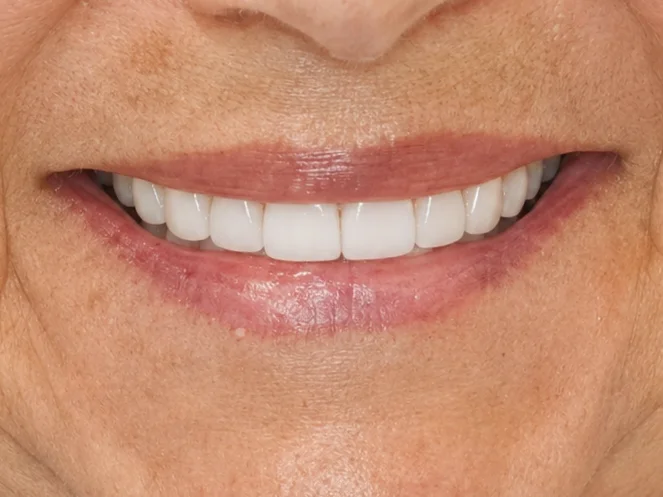
All-on-4 vs. Traditional Implants: Which Is the Best Option for Full Mouth Restoration?
Losing multiple teeth — or facing the prospect of full tooth loss — is one of the most impactful dental experiences a person can go through. It affects how you eat, how you speak, how you look, and how you feel about yourself in every social situation.
The good news: modern implant dentistry offers solutions that are more effective, more durable, and more accessible than they've ever been. According to a 2025 dental services report, over 150 million Americans are missing at least one tooth — yet only about 1 million receive dental implants annually (Newport Beach Dental Center, 2025).
The most common question we hear from patients considering full mouth restoration in Cooper City and across Broward County is: what's the difference between All-on-4 and traditional implants — and which one is right for me?
This guide gives you the honest clinical answer.
What Are Traditional Dental Implants?
Traditional dental implants replace individual teeth using a titanium post that is surgically placed into the jawbone. Over a period of 3-6 months, the post integrates with the bone (a process called osseointegration), after which a crown is placed on top.
For full mouth restoration using traditional implants, a patient typically requires 6-10 implants per arch — one for each missing tooth, or in a strategic distribution to support a full-arch bridge. This approach offers excellent long-term outcomes but requires significant bone volume, multiple surgical sites, and a longer overall treatment timeline.
What Is the All-on-4 Concept?
All-on-4 is a full-arch rehabilitation technique developed by Dr. Paulo Maló in collaboration with Nobel Biocare in the 1990s. The concept uses only four strategically placed implants per arch — two vertical implants in the front and two angled implants (at approximately 30-35 degrees) in the posterior region — to support a complete fixed prosthesis.
The angled placement of the posterior implants allows them to engage denser bone in the front of the jaw, bypassing areas of bone loss common in patients with long-term tooth loss. This eliminates the need for bone grafting in most cases.
Most importantly: patients receive a fixed temporary prosthesis on the same day as surgery. They leave the office with functional, permanent-looking teeth — not a removable denture.

Clinical Evidence: How Do They Compare?
All-on-4 Success Rates
The clinical evidence for All-on-4 is extensive and compelling:
10-year longitudinal study (PubMed, Journal of Oral and Maxillofacial Surgery): A landmark study following patients with All-on-4 treatment in the mandible reported cumulative implant success rates of 94.8% at five years and 94.8% with up to 10 years of follow-up. Prosthesis survival rate was 99.2% at 10 years.
5-13 year outcomes: Multiple clinical studies and retrospective analyses consistently report survival and success rates exceeding 95% over 5-13 years of follow-up (allonfour.com, citing peer-reviewed literature, 2025).
Digital protocol advantage: A randomized clinical trial published in a peer-reviewed journal found that patients treated with a fully digital All-on-4 protocol reported lower pain during and after surgery, and rated digital smile preview (93%) and guided surgery (94%) as highly effective (NCBI, PMC8037328).
Traditional Implants Success Rates
Traditional individual implants also have strong long-term evidence, with survival rates generally reported at 95-98% over 10 years when placed in patients with adequate bone volume and good oral hygiene. However, for patients with significant bone loss — common after prolonged tooth loss — success rates decrease without bone grafting procedures.

Key Differences: A Practical Comparison
Number of implants per arch: All-on-4: 4 | Traditional: 6-10
Bone grafting typically required: All-on-4: No | Traditional: Often yes (for significant bone loss)
Same-day teeth: All-on-4: Yes | Traditional: No (3-6 month wait per arch)
Total treatment time: All-on-4: Weeks | Traditional: 6-18 months
Best for: All-on-4: Full arch or full mouth loss, bone atrophy | Traditional: Single or multiple missing teeth, adequate bone
Removable: All-on-4: No (fixed) | Traditional: No (fixed)
Replaces dentures: All-on-4: Yes | Traditional: Partial
Who Is a Candidate for All-on-4?
All-on-4 is particularly well-suited for patients who:
→ Are missing all or most teeth in one or both arches
→ Currently wear removable dentures and want a fixed, permanent solution
→ Have experienced bone loss that would require grafting for traditional implants
→ Want to minimize surgical procedures and recovery time
→ Are in generally good health without conditions that impair healing (uncontrolled diabetes, active cancer treatment, heavy smoking)
Traditional implants may be preferable for patients missing only a few teeth, patients with healthy bone volume, or cases where individual tooth replacement is more appropriate than a full-arch prosthesis.
The All-on-4 Process at Jonari Dental
Dr. Streett is a Fellow certified in implantology — meaning this is not a general dentist learning a new procedure. This is a specialist-level protocol delivered by a practitioner with advanced credentials and extensive case experience.
Your All-on-4 journey at Jonari Dental begins with a 3D CBCT scan to map your bone structure in detail. This allows us to plan implant placement with surgical precision before a single incision is made — maximizing both safety and outcome predictability.

Book Your Implant Consultation in Cooper City
Whether All-on-4 or traditional implants are right for you depends on factors unique to your case. The first step is a conversation with a qualified specialist — and that consultation is free.

_11zon.webp)

.webp)