





If you're missing a tooth — or several — you've probably started researching dental implants. And you've probably also discovered that the information out there is overwhelming, inconsistent, and often written to sell you before it explains anything.
This guide is different. It's a complete, honest walkthrough of everything you should understand before your dental implant consultation in Cooper City, FL: what implants actually are, the different types, the full process from start to finish, how long healing takes, who qualifies, and what it really costs. By the end, you'll walk into your consultation informed and confident — knowing the right questions to ask.
What Are Dental Implants, Exactly?
A dental implant is a small titanium post that's surgically placed into your jawbone to act as an artificial tooth root, topped with a custom crown that looks and functions like a natural tooth. Unlike bridges or dentures, implants are the closest thing modern dentistry has to a real tooth — because they replace the root, not just the visible part.
Every dental implant has three parts:
- The implant post — a cylindrical titanium screw placed in the jawbone that fuses with the surrounding bone over time, functioning like a natural tooth root.
- The abutment — the connector piece that joins the implant post to the replacement tooth.
- The crown — the natural-looking, custom-made replacement tooth that sits on top.
This design gives implants unmatched stability and lets them look, feel, and work like your own teeth — which is why they're considered the gold standard for tooth replacement.
What Are the Different Types of Dental Implants?
The right type of dental implant depends on how many teeth you're missing — from a single tooth to a full arch. Understanding the options helps you know what to expect at your consultation.
- Single tooth implant — one implant topped with one crown, to replace a single missing tooth without affecting neighboring teeth.
- Implant-supported bridge — when several teeth in a row are missing, a few implants support a bridge, rather than one implant per tooth.
- All-on-4 / All-on-X (full arch) — an entire arch of teeth replaced with just four to six implants supporting a fixed prosthesis. This is the solution for patients missing most or all of their teeth.
- Implant-supported dentures — dentures that snap securely onto implants for far more stability than traditional removable dentures.
The best option for you is determined during a consultation, based on how many teeth are missing, your bone health, and your goals.
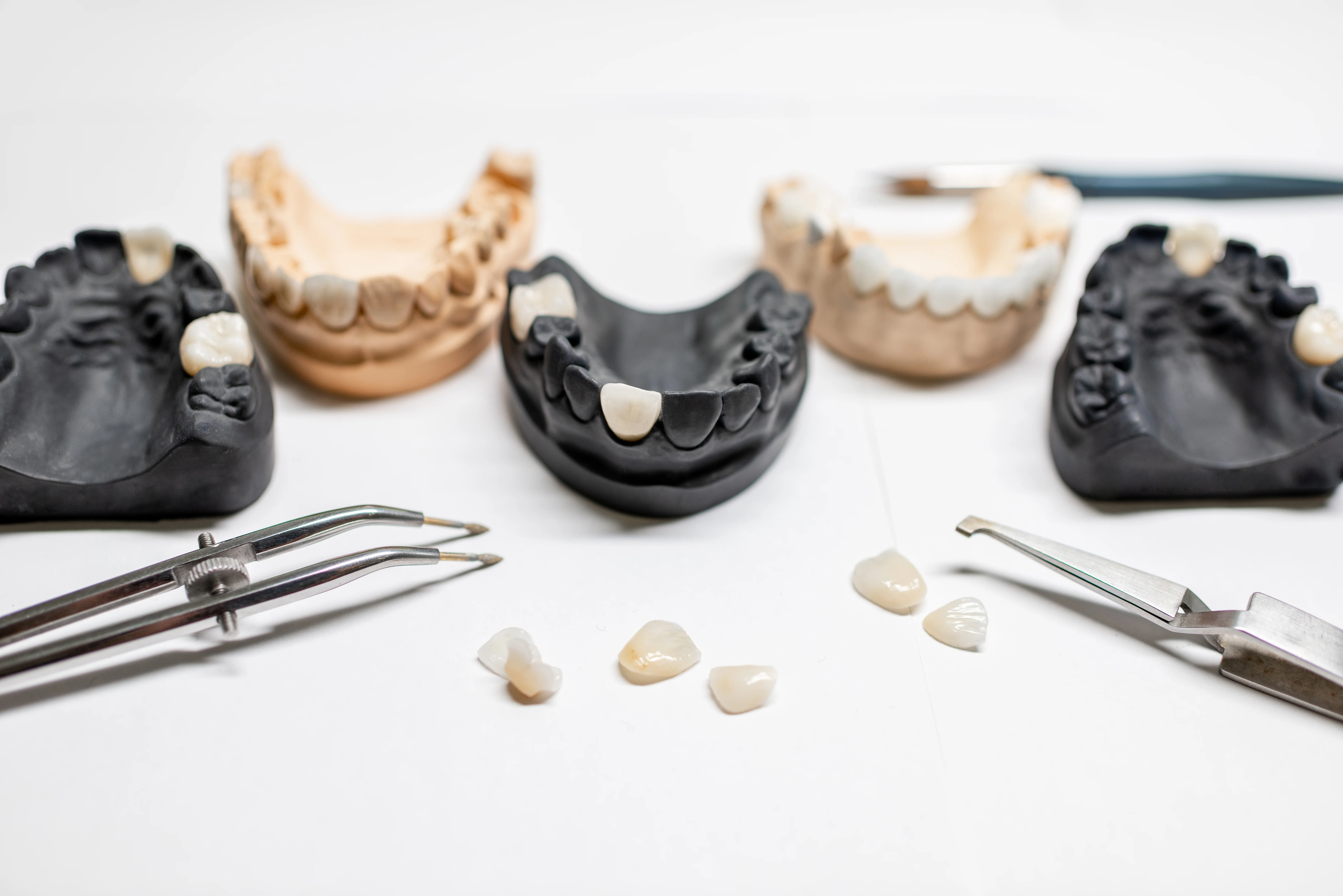
The Dental Implant Process, Step by Step
The dental implant process typically unfolds over several months, because the implant needs time to fuse with the jawbone before the final crown is placed. Here's the full journey so there are no surprises.
Step 1 — Consultation and 3D Imaging
Your journey begins with a comprehensive consultation. Advanced 3D imaging (a CBCT scan) creates a detailed picture of your jawbone, so your dentist can plan exactly where the implant will go and confirm you have enough bone to support it.
Step 2 — Preparation (if needed)
If a damaged tooth needs to come out first, or if you need bone grafting to build up the jaw, this is done before implant placement. Not everyone needs this step — the 3D scan reveals whether it's necessary.
Step 3 — Implant Placement
The titanium implant post is surgically placed into the jawbone. This is a precise, planned procedure, and many patients are surprised by how manageable the recovery is.
Step 4 — Osseointegration (Healing)
This is the part that takes time. Over the next several months, the implant fuses with the surrounding bone in a process called osseointegration. This is what gives the implant its lifelong stability. In some cases, a temporary tooth is placed during this period.
Step 5 — Abutment and Final Crown
Once the implant has fully integrated, the abutment is attached and your custom, natural-looking crown is placed. Your new tooth is complete — and it functions just like the real thing.
How Long Does Dental Implant Healing Take?
Dental implant healing typically takes 3 to 6 months for the implant to fully fuse with the jawbone, though the exact timeline depends on your individual healing, the location of the implant, and whether preparatory procedures were needed. While this may sound long, it's what makes implants a permanent, lifelong solution rather than a temporary fix. In many cases, you won't be without a tooth during this time, since a temporary can be placed.
Who Is a Candidate for Dental Implants?
You're likely a candidate for dental implants if you have one or more missing teeth, healthy gums, and enough jawbone to support the implant — but a consultation is the only way to know for certain. Good candidates generally have:
- One or more missing teeth they want to replace permanently
- Healthy gums — active gum disease needs to be treated first
- Adequate bone density — or the option of a bone graft to build it up
- Good overall health — certain conditions may require extra planning
Even if you've been told you're not a candidate elsewhere — often due to bone loss — modern techniques like bone grafting or angled implant placement (as used in All-on-4) mean more people qualify than ever before. Don't assume you're out of options until you've had a proper evaluation.
How Much Do Dental Implants Cost in Cooper City, FL?
In South Florida, a single dental implant typically costs $3,000 to $6,000, including the post, abutment, and crown. The exact price depends on your specific situation, because implants are customized medical procedures.
Several factors affect the final cost:
- Number of implants — a single tooth versus a full arch
- Materials — high-quality titanium or zirconia lasts longer
- Additional procedures — extractions, bone grafting, or sinus lifts add to the total
- Sedation needs — IV sedation adds cost
- The provider's experience — expertise directly affects long-term outcomes
For full-arch solutions like All-on-4, costs in Florida generally run $20,000 to $30,000 per arch. A consultation gives you an exact figure for your case — and at Jonari Dental, we offer financing through CareCredit, Cherry, and Alphaeon to make treatment accessible.
One honest tip: be cautious of prices that seem too good to be true. As with any medical procedure, the cheapest option isn't always the best value — the experience of the provider directly affects whether your implant lasts a lifetime or fails in a few years.
Why Choose Jonari Dental for Implants in Cooper City?
When it comes to something as important — and permanent — as dental implants, two things matter most: the experience of the provider and the convenience of care close to home.
Jonari Dental is located right in Cooper City, FL — not a 25-minute drive away in a neighboring city. The practice is led by Dr. Rosario Streett, D.D.S., FICOI, whose Fellowship in the International Congress of Oral Implantologists (FICOI) reflects advanced training and commitment in the field of dental implantology, backed by more than 20 years of clinical experience.
Just as importantly, Jonari Dental is fully bilingual — English and Spanish — so every part of your implant journey, from the consultation to the final crown, is explained clearly in the language you're most comfortable with. The practice serves Cooper City, Davie, Pembroke Pines, Miramar, and all of Broward County.
Frequently Asked Questions
How much does a single dental implant cost in Cooper City?
In South Florida, a single dental implant typically costs $3,000 to $6,000, including the implant post, abutment, and crown. The exact price depends on factors like materials and whether you need additional procedures such as a bone graft. Jonari Dental provides a precise quote at your consultation and offers financing through CareCredit, Cherry, and Alphaeon.
How long does the whole dental implant process take?
The full process usually takes several months, mainly because of osseointegration — the 3-to-6-month period when the implant fuses with your jawbone. This healing is what makes implants a permanent solution. In many cases you won't be without a tooth during that time, since a temporary can be placed while you heal.
Do dental implants hurt?
Most patients are surprised by how manageable the procedure and recovery are. Implant placement is done with anesthesia so you're comfortable during surgery, and post-operative discomfort is typically controlled with common pain relievers. Your dentist provides clear aftercare instructions for a smooth recovery.
Can I get implants if I've been told I don't have enough bone?
Possibly. Bone loss doesn't automatically rule you out. Modern techniques like bone grafting and angled implant placement (used in All-on-4) allow many people who were previously told "no" to qualify. The only way to know is a proper evaluation with 3D imaging, which reveals your real options.
Are dental implants better than dentures or a bridge?
For many patients, yes. Implants are the only option that replaces the tooth root, which preserves jawbone and provides unmatched stability — they don't slip like dentures or require altering neighboring teeth like a traditional bridge. The best choice depends on your specific situation, which a consultation clarifies.
A dental implant is one of the most reliable, natural-feeling investments you can make in your health and confidence. And the more you understand before your consultation, the better the decisions you'll make.
If you're ready to explore whether implants are right for you, the first step is a simple conversation — close to home, in your language, with a dentist who has the training to do it right.


