





Porcelain Veneers: The #1 Cosmetic Treatment That Transforms Your Smile
If you've ever looked at a smile and thought "that looks impossibly perfect" — there's a good chance porcelain veneers were involved.
Veneers are the most versatile cosmetic dental treatment available. In two visits, they can address discoloration that whitening can't fix, reshape teeth that are too small or worn down, close gaps without orthodontics, repair chips and cracks, and create the uniform, balanced smile that most patients visualize when they say they want a smile makeover.
According to URBN Dental's 2026 cosmetic dentistry statistics report, 90% of patients report significant improvements to their smiles post-veneers — one of the highest satisfaction rates of any elective dental procedure. And clinical research backs up that satisfaction with durability data that's hard to argue with.
Here's everything you need to know about porcelain veneers — from the science behind them to what you can realistically expect at Jonari Dental in Cooper City, Florida.
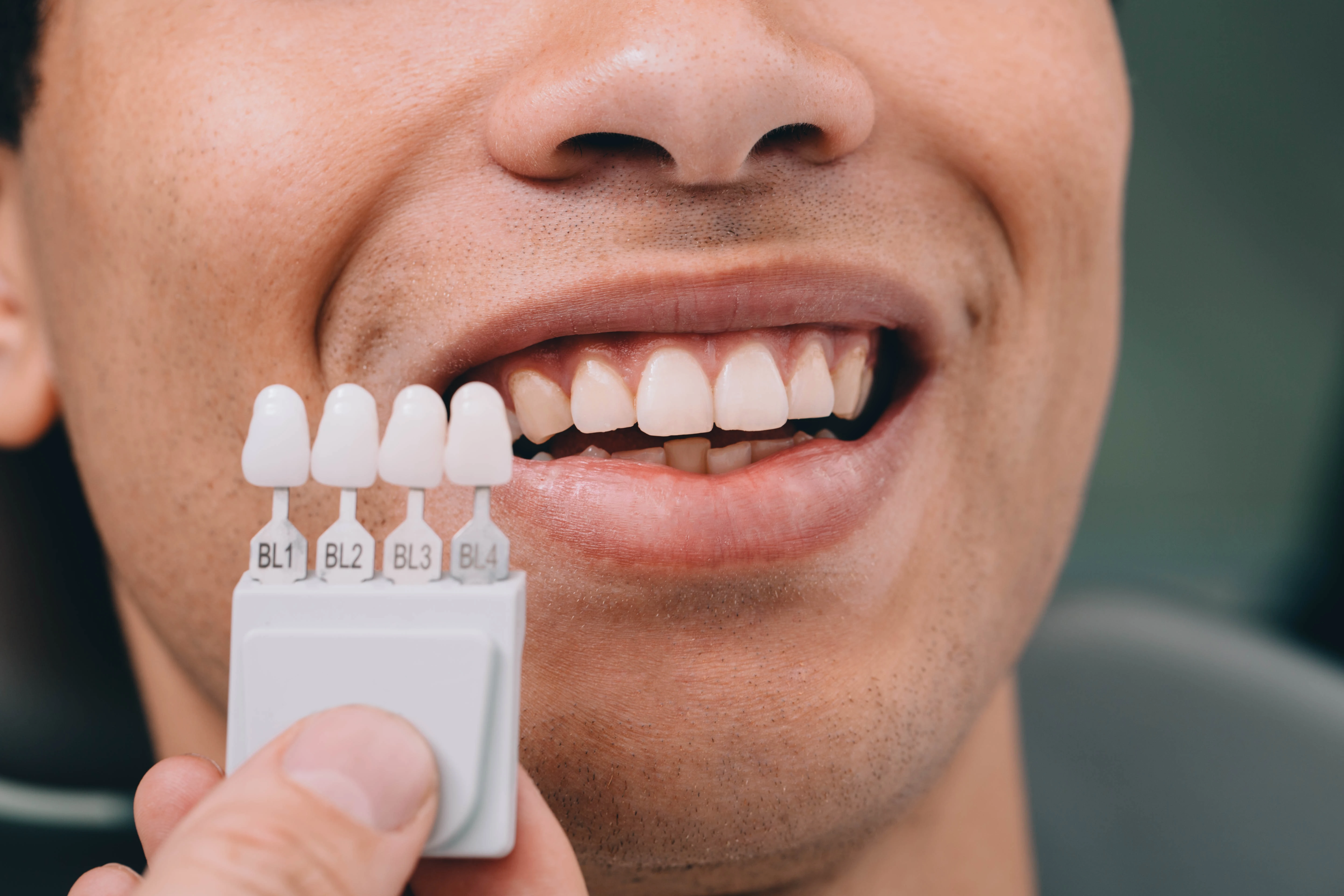
What Are Porcelain Veneers?
Porcelain veneers (also called porcelain laminate veneers or PLVs) are ultra-thin, custom-fabricated ceramic shells — typically 0.3 to 0.5 millimeters thick — that are permanently bonded to the front surface of your natural teeth.
They are not caps. They are not crowns. They don't cover the entire tooth — only the visible front surface. This makes them one of the most conservative cosmetic treatments available: the preparation involves removing a very thin layer of enamel (approximately equal in thickness to the veneer itself) so the final result looks natural, not bulky.
Porcelain mimics the translucency and light-reflecting properties of natural tooth enamel more accurately than any other restorative material — which is why properly placed veneers are essentially indistinguishable from natural teeth, even under close inspection.
What Problems Do Veneers Fix?
Porcelain veneers are one of the most effective treatments for the following concerns:
✅ Severe or intrinsic discoloration that whitening cannot resolve (tetracycline staining, fluorosis, internal staining from trauma)
✅ Chipped, cracked, or worn teeth
✅ Slightly misaligned or overlapping teeth (without the time investment of orthodontics)
✅ Gaps between teeth (diastemas)
✅ Teeth that are too small, too short, or disproportionate in shape
✅ Uneven gum lines combined with gum contouring
✅ A smile that looks aged, dull, or asymmetrical
What veneers cannot fix: significant structural damage that requires a crown, severe bite misalignment that requires orthodontics, or active gum disease (which must be treated before any cosmetic procedure).

The Clinical Evidence: How Long Do Veneers Last?
The longevity of porcelain veneers is one of the most well-documented outcomes in cosmetic dentistry:
95.5% survival rate at 10 years: A systematic review analyzing data from 6,500 porcelain laminate veneers across 25 studies found a 10-year cumulative survival rate of 95.5%. When fracture, debonding, secondary caries, and need for endodontic treatment were considered as isolated failure reasons, rates ranged from 96.3% to 99.3% (NCBI PMC7961608, Journal of systematic review).
96% functional at 5 years: Clinical studies reveal approximately 96% of porcelain veneers remain functional after five years, with survival rates over 90% at 10 and 12 years (Veenstra Dental, citing peer-reviewed literature, 2025).
Expected lifespan 10-25 years: With proper care and regular dental maintenance, most porcelain veneers last between 10 and 15 years. Many patients achieve results lasting 20 years or more — significantly outperforming composite veneers, which typically require replacement every 4-8 years.
The Veneer Process at Jonari Dental: 2 Visits
Visit 1: Consultation, Design, and Preparation
Your first visit combines consultation and preparation. We begin with a thorough evaluation of your teeth, bite, and facial structure. Using Digital Smile Design technology, we create a digital preview of your proposed veneer result — you see your new smile before any preparation begins and can request adjustments until the design is exactly right.
Once the design is approved, we prepare the teeth by removing the thin layer of enamel necessary for proper veneer placement. Digital impressions are taken (no uncomfortable putty trays) and sent to the dental laboratory. Temporary veneers are placed so you leave with a protected, natural-looking smile.
Visit 2: Bonding and Final Placement
When your custom veneers return from the laboratory — typically within 1-2 weeks — you return for final placement. We verify the fit, color, and shape against your approved digital design. Any minor adjustments are made chairside before the permanent bonding procedure.
Bonding is precise work: each veneer is etched, primed, and cemented using specialized dental adhesive and cured with a light source for maximum bond strength. The result is a restoration that becomes functionally integrated with your tooth structure.
Porcelain vs. Composite Veneers: Which Is Right for You?
Porcelain veneers: Lasts 10-25 years · Highest stain resistance · Most natural appearance · Requires 2 visits · Irreversible preparation
Composite veneers: Lasts 4-8 years · More prone to staining · Slightly less translucent · Can be done in 1 visit · Less preparation required
For patients seeking the most durable, natural-looking, and long-lasting result, porcelain is the clinical standard. Composite veneers offer a more affordable entry point for younger patients or those who want to trial the look before committing to porcelain.

How to Make Your Veneers Last
Porcelain veneers do not require special maintenance — they are cared for exactly like your natural teeth. However, a few habits significantly extend their lifespan:
Wear a nightguard if you grind your teeth: Bruxism is the leading cause of premature veneer failure. If you grind at night, a custom nightguard is a mandatory investment.
Avoid biting hard objects directly: Ice, hard candies, pen caps, fingernails. Porcelain is strong but not indestructible.
Maintain excellent oral hygiene: Brush twice daily, floss once daily. Gum disease that develops under veneers can undermine the bond and require costly repairs.
Schedule regular checkups: Every 6 months. We inspect the margins of your veneers, check the bond integrity, and clean areas that are hard to reach at home.
Are Porcelain Veneers Right for You?
The best candidates for porcelain veneers are patients with healthy teeth and gums who have cosmetic concerns that can't be fully addressed by whitening or bonding alone. You don't need to be missing teeth or have severe damage — veneers are a cosmetic treatment for teeth that are structurally sound but visually imperfect.
If you're not sure whether veneers are the right solution for your specific concerns, our Smile Design consultation will evaluate your case and present every available option — including the relative costs, timelines, and expected longevity of each.

Transform Your Smile in 2 Visits
Porcelain veneers at Jonari Dental are designed from scratch, approved by you, and placed with precision by a Fellowship-certified cosmetic dentist. Your consultation is free, your design preview is included, and your results last a decade or more.

_11zon.webp)

.webp)