

What Our Patients in Cooper City Are Saying
Hundreds of South Florida families trust Jonari Dental for implants, cosmetic care, and dental emergencies — see why.
How whitening actually works
Every whitening product — professional or over-the-counter — works the same chemical way. It contains hydrogen peroxide or carbamide peroxide (which breaks down into roughly one-third hydrogen peroxide once it's on the tooth). The peroxide diffuses into the enamel, and through a process called oxidation it breaks the large, deeply colored stain molecules into smaller, lighter-colored pieces. Nothing is removed from the tooth; the stain molecules themselves are chemically changed.
Why teeth stain, and why the cause changes the fix
Not all discoloration lives in the same layer of the tooth, and whitening only reaches one of them. That's the single most useful thing to know before choosing a treatment — and the most common reason a patient tries whitening and is disappointed by the result.
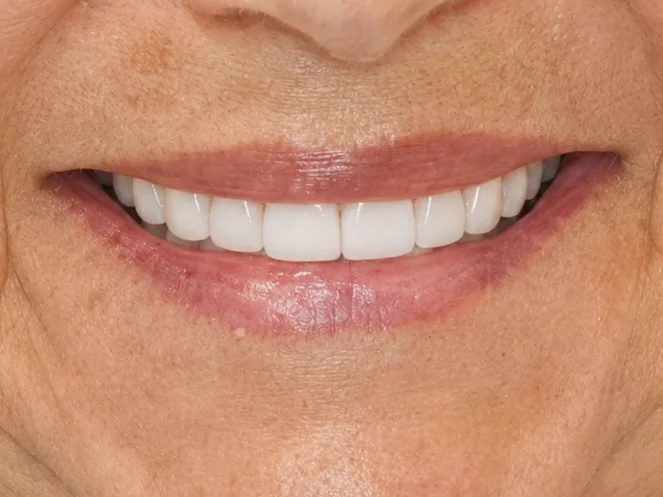
Extrinsic stains are chromogens — colored compounds from food, drink and tobacco — that attach to the outer enamel. They respond well to polishing and to whitening.1 Intrinsic stains sit deeper, inside the dentin that gives a tooth its underlying color: enamel naturally thins with age and lets more of that yellow dentin show through, an old injury can darken a tooth from the inside, and antibiotics like tetracycline taken during tooth development can cause banding that whitening handles poorly.
.webp)
Frequently Asked Questions
Which is better: in-office or take-home whitening?
Will whitening hurt?
How white will my teeth actually get?
Why didn't whitening make my crown or filling any lighter?
Can I whiten if I'm pregnant or breastfeeding?
We recommend waiting. It's not that whitening has been shown to cause harm — it's that it hasn't been specifically studied in pregnancy, and an elective cosmetic treatment isn't worth that uncertainty. Both the ADA and the American Pregnancy Association recommend postponing it until after delivery.
Beauty & Protection for Your Smile

Dr. Rosario Streett, D.D.S, FICOI
Founder & Lead Dentist — Jonari Dental, Cooper City, FL.
Dr. Streett has over 20 years of experience in cosmetic and restorative dentistry, with advanced specialty training in implant placement — from single implants to full-arch All-on-X restorations. A University of Miami residency graduate and ICOI Fellow, she uses guided surgery and artistic precision to deliver results that look natural and last. Patients across Cooper City and South Florida trust her for one simple reason: she gets it right.
"My goal is for every patient to leave with a smile they're proud to show — and the confidence that their results will last a lifetime." — Dr. Rosario Streett, D.D.S, FICOI