
How SureSmile Clear Aligners Work, Step by Step
A plain-language walkthrough of SureSmile clear aligners: the evaluation, the digital plan, wearing the trays, check-ups and keeping your results afterward.
SureSmile® clear aligners work by moving your teeth gradually, one small step at a time, using a series of custom-made transparent trays that you wear for most of the day. Each tray is planned in advance on a digital model of your mouth, so the movement is mapped from your starting position to the intended result.
If you are weighing aligners against metal braces, or you simply want to know what you would be signing up for, this guide follows the process in order. At Jonari Dental in Cooper City, FL, your treatment is overseen by Dr. Rosario Streett, D.D.S., and the details always depend on your own teeth.
What are SureSmile clear aligners?
SureSmile® clear aligners are removable, nearly invisible trays that fit snugly over your teeth and apply gentle, controlled pressure to guide them into better alignment. They are an alternative to traditional braces for many adults, with no wires or brackets bonded to the teeth.
They are commonly used to correct crooked teeth, close small gaps and improve some bite problems. They are also sometimes used to prepare the teeth before cosmetic work.
What happens at the first appointment?
The first appointment is an evaluation: the dentist examines your teeth, gums and bite, asks what you would like to change and tells you whether aligners seem suitable. This step comes before anything is made, because aligners only move teeth. They do not treat cavities or gum problems.
If something else needs attention first, such as decay or inflamed gums, we will explain that and plan the order of care. Starting tooth movement on an unhealthy foundation is usually not a good idea.
How is the treatment plan made?
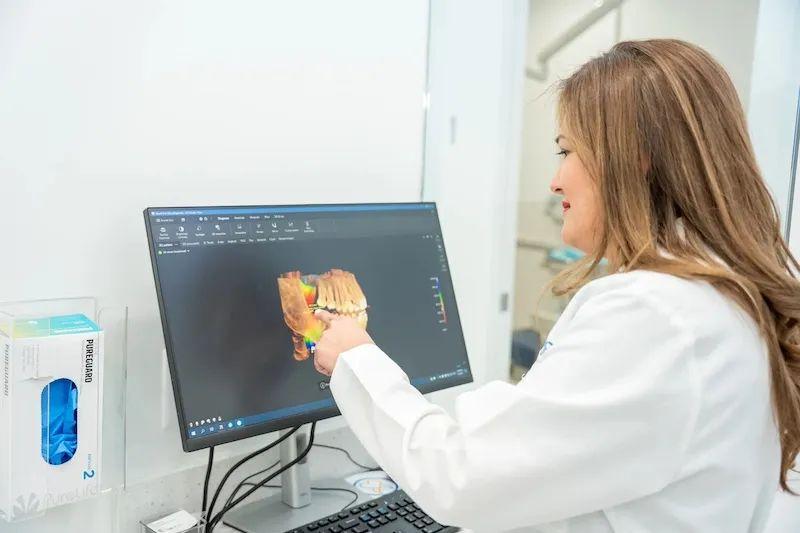
The plan is made digitally: your teeth are recorded, a 3D model is built, and the planned movements are divided into small stages, each represented by one set of aligners. This is the heart of how the system works, because it lets the dentist see the path your teeth are meant to follow before treatment starts.
Digital planning aims for predictable, efficient movement and a result designed around your goals. Plans can be adjusted as treatment advances, since teeth do not always respond exactly as expected.
How do the aligners move my teeth?
Each set of aligners is shaped slightly differently from your current tooth positions, so when you wear it, it presses your teeth toward the next planned position. Over time, the bone around the teeth gradually remodels to support the new position, which is why tooth movement takes weeks and months rather than days.
Some cases also use small tooth-colored attachments or other aids to help the trays grip and guide certain teeth. Whether you would need them is part of the plan for your case.
What is it like to wear them every day?
Day to day, you wear the aligners for roughly 20 to 22 hours and remove them only to eat, drink anything other than cold water, brush and floss. Consistent wear is the single most important factor in keeping treatment on schedule.
- Eating: take the trays out, enjoy your meal, brush, then put them back in.
- Cleaning: brush and floss as usual, and clean the trays as instructed so they stay fresh and clear.
- Storage: keep the trays in their case when they are out, and not wrapped in a napkin where they can be thrown away by accident.
- Comfort: mild pressure when you begin a new set is normal and usually settles. Let us know if discomfort continues.
How often will I come in for check-ups?
You return for periodic check-ups so the dentist can confirm that your teeth are tracking the plan, review how the trays fit and adjust the approach if needed. The schedule depends on your case, and we will explain it when we plan your treatment.
These visits are also a good time to ask questions. If a tray feels loose, if you lose one or if you miss a few days of wear, tell us rather than trying to make up the time on your own.
What happens after the last aligner?
After the last aligner you will normally need a retainer, because teeth have a natural tendency to drift back toward their old positions. Wearing the retainer as directed is what protects the result you worked toward.
Many patients also think about the next step for their smile once the teeth are straight, such as a professional cleaning and whitening. Straight teeth are also easier to keep clean.
Who may be a candidate for SureSmile aligners?
Adults with healthy teeth and gums who want to correct crooked teeth, small gaps or certain bite concerns may be candidates, though only an examination can confirm it. People who are unlikely to wear the trays consistently, or who have untreated dental problems, may need a different plan.
If you would like to find out, you can read more about SureSmile® clear aligners at Jonari Dental or call (754) 296-3800 to ask about an evaluation in Cooper City.
 Looking for Invisalign in Cooper City? Here Is a SureSmile Alternative
 What Is Gingival Hyperplasia? Causes, Signs and When to See a Dentist
 Black Friday Dental Deals: Are They Actually Worth It?